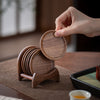
Why Small Variations Can Make Decor Feel More Human
, by LignovanciaAtelier, 1 min reading time
, by LignovanciaAtelier, 1 min reading time
How grain, glaze, color variation, and hand-finishing can give decor more character—and where normal variation ends and a real product-quality issue begins.
Two objects can share the same product name and still look slightly different. In wood, the grain changes. In reactive glaze, color pools differently. In stone, veins shift. In some hand-finished products, small details vary from batch to batch.
Those differences can make an object feel less anonymous—but only when the customer knows what kind of variation to expect.

Wood grain, stone veining, and some ceramic glazes cannot be perfectly identical across pieces. That is normal and often desirable.
Sanding, painting, glazing, or assembly completed partly by hand can create small changes in edge softness, color distribution, or surface marks. The important word is small.
If the product arrives in a different material, a substantially different color, a changed structure, or with missing parts, that is not an artistic variation. It is a product problem.
This distinction matters to us because vague language such as “every piece is unique” should never be used to avoid responsibility for a listing that does not match the item delivered.
A customer is more likely to appreciate a reactive glaze or wood grain when the listing explains it clearly before purchase. Good product photography should show the range rather than only the most perfect sample.
We want the object you receive to be recognizably the same object you chose online. Material variation can add character; it should not rewrite the product.
That principle is increasingly important as we broaden Lignovancia beyond wood into ceramic, metal, glass, stone, and other materials. Different materials behave differently, but the expectation stays the same: show the product honestly and describe the variation clearly.


